

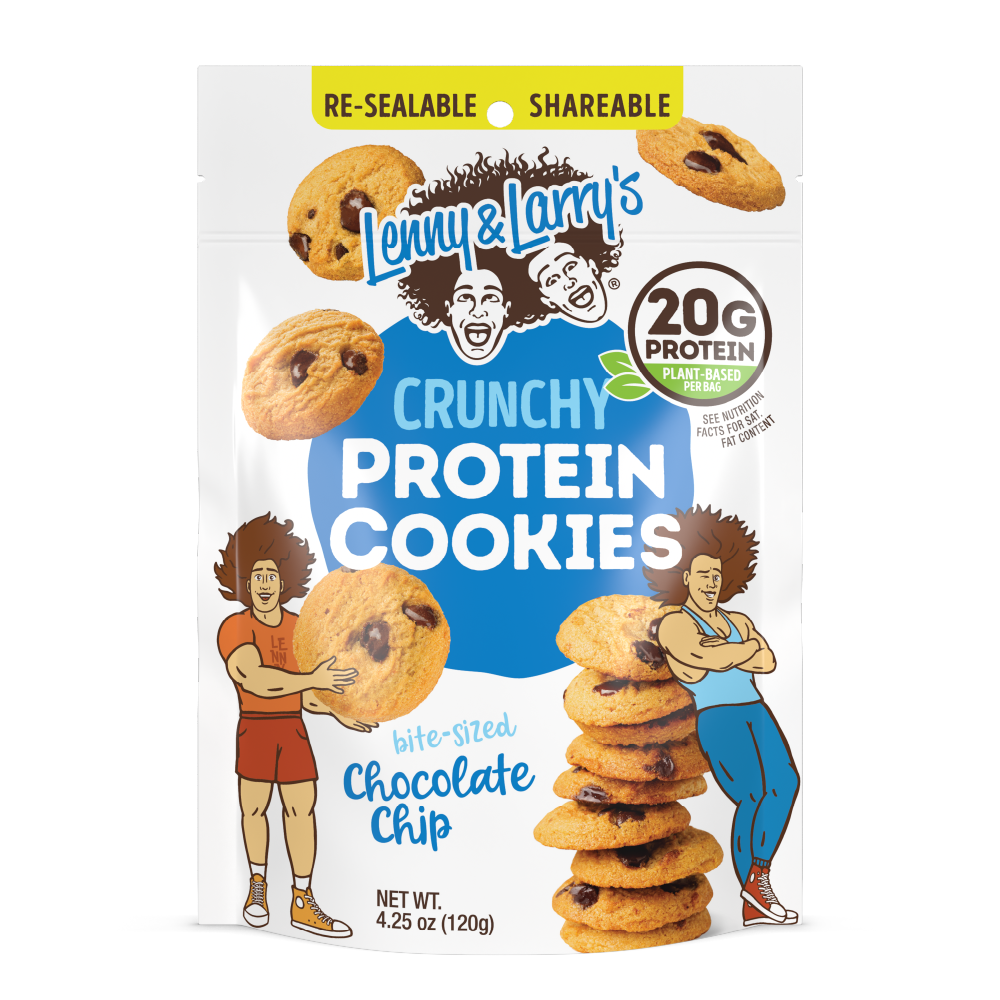

Protein desserts are one of the fastest-growing categories in the snack aisle right now.
At the same time, a wave of dietitians, researchers, and health reporters have started publicly pushing back on how much protein people actually need.
Both of those things are true, and they are not actually in conflict. The resolution explains where the protein dessert category is headed next, and it isn't a bigger number on the label.
Why Are Protein Desserts Growing While Protein Skepticism Is Also Growing
Both trends are real because they describe two different audiences moving at two different speeds: mainstream demand is still climbing while the expert conversation has already moved past "more protein" toward "how much is actually useful."
Consumer demand data backs up the growth side. Protein-forward formats are posting some of the strongest gains in the snack aisle this year, including protein ice cream (+40%), high-protein yogurt (+46%), and protein snacks broadly (+30%), according to consumer search and purchase trend data.
But the same year that produced those numbers also produced a public correction from the health side. Registered dietitians and nutrition researchers have started publishing direct rebuttals to what's now commonly called "protein-maxxing," arguing that the marketing has outrun the science for a meaningful share of buyers.
What Is Protein Maxxing And Why Are Experts Pushing Back

Protein-maxxing describes deliberately pushing daily protein intake well beyond what research supports, often chasing numbers popularized on social media rather than clinical guidance.
Lisa Froechtenigt, a registered dietitian and Bariatric Program Coordinator in the Michael E. DeBakey Department of Surgery at Baylor College of Medicine, put a number on the ceiling most marketing ignores: "The body can only absorb about 30 grams of protein per intake." Her team notes that when a single serving pushes past roughly 45 grams, the surplus is either eliminated through the kidneys or stored as fat rather than used to build anything.
The Kendall Reagan Nutrition Center at Colorado State University puts real numbers next to the viral ones: the RDA minimum is 0.8 grams per kilogram of body weight, optimal intake for most active adults sits at 1.2 to 1.6 grams per kilogram, and even high-performance athletes rarely need more than 2.2 grams per kilogram. For a 150-pound adult, that's roughly 81 to 108 grams a day, not the 150+ grams viral posts often recommend.
This isn't just marketing skepticism. It echoes documented physiological ceilings on how much protein the body can actually put to use in a single sitting, something we broke down in more depth in our piece on the muscle full effect.
Why Is Fiber Being Called The Next Protein

Fiber is being positioned as protein's successor because it addresses a nutrition gap most protein products never touch.
According to the International Food Information Council's 2025 Food & Health Survey, 64% of Americans say they're intentionally trying to eat more fiber, yet only about 5% currently get the recommended amount. Separately, the American Society of Nutrition puts the figure even lower, at just 7% of American adults meeting daily fiber recommendations. PepsiCo CEO Ramon Laguarta said it plainly in trade press coverage: "I think fiber will be the next protein." Whole Foods Market named fiber one of its official Top Food Trends for 2026, citing rising fiber callouts and fortification across categories well beyond snacking.
What Happens When Protein Desserts Add Fiber Instead Of Just More Protein
A protein-plus-fiber formulation is a more durable claim than a protein-only one, because it targets a nutrient gap that isn't under public scrutiny the way high-grams protein marketing currently is.
| What Changes | Protein-Only Positioning | Protein + Fiber Positioning |
|---|---|---|
| What it markets on | Grams of protein on front of pack | Grams of protein AND grams of fiber on front of pack |
| Nutrient gap addressed | Muscle recovery / satiety, already mainstream | Fiber intake gap experts call more urgent (5-7% of adults meeting recommendations) |
| Exposure to expert pushback | High — direct target of "protein-maxxing" criticism | Low — fiber is broadly recommended with little controversy |
| Where forecasters place it for 2026 | Maturing, increasingly scrutinized category | Named incoming trend by Whole Foods and trade press |
What This Means For The Next Wave Of Protein Desserts & Snacks
The protein desserts that lead the next phase of the category will be the ones already built around both macros, not the ones racing to add one more gram of protein to the label.
A protein number alone is starting to invite the exact scrutiny described above: is this actually usable, or just a bigger figure for the front of the box? A fiber number next to it changes the question entirely, because it's addressing a gap regulators, dietitians, and retailers all agree is real and mostly unmet.
The Limited Edition Pumpkin Spice Protein Cookie is a clean example of that shift already showing up on shelf: 16 grams of protein and 10 grams of fiber in a single soft-baked snack, without leading with protein alone.
Frequently Asked Questions
Is Protein Maxxing Bad For You?
For most healthy adults, pushing protein far beyond need doesn't build extra muscle, it just gets processed as extra fuel or stored as fat. Registered dietitians note the body can only put roughly 30 grams of protein to use per sitting, and very high sustained intakes can stress the kidneys, particularly in people with existing kidney conditions.
How Much Protein Do You Actually Need In A Day?
The RDA minimum is 0.8 grams per kilogram of body weight. Most active adults do better around 1.2 to 1.6 grams per kilogram, and even high-performance athletes rarely need more than 2.2 grams per kilogram. For a 150-pound adult, that's roughly 81 to 108 grams a day for most goals.
Why Is Fiber Suddenly Everywhere In Snacks?
Because the gap is large and well documented. Surveys show a majority of Americans are trying to eat more fiber, but independent data sources put actual daily achievement of fiber recommendations between roughly 5% and 7% of adults. Food brands and retailers, including Whole Foods Market, have flagged fiber as a leading 2026 trend as a result.
What Should I Look For In A Protein Snack Now?
Don't stop at the protein number. A snack that also delivers meaningful fiber is addressing a nutrient gap most people actually have, rather than adding protein most people have already met for that sitting. Ingredient quality and how the protein and fiber are sourced still matter more than either number alone.
Are Protein Desserts Just A Fad?
The category itself looks durable based on current growth data, but grams-only protein marketing is increasingly exposed to expert pushback. The products likely to stay relevant are the ones evolving past a single big number toward formulations that also close the fiber gap most consumers actually have.