


Walk into any gym and you'll see the same ritual: the shaker bottle is cracked open before the person has even left the floor, because somewhere along the way, everyone agreed there's a 30-minute clock ticking on their gains.
That clock doesn't exist. Neither do several of the other post-workout rules that have hardened into gym gospel over the last two decades.
The research on post-workout nutrition is actually more settled than the advice you'll hear at the gym (it's just that a lot of that advice hasn't caught up with the science).
Before you begin - always consult your physician before beginning any exercise (or dietary) program(s). This general information is not intended to diagnose any medical condition or to replace your healthcare professional. Consult with your healthcare professional to design an appropriate exercise prescription (or dietary program) that's right for you.
Here are five of the most common myths, and what the studies behind them actually say.
Do You Really Have Only 30 Minutes to Eat After a Workout?

No - the "anabolic window" is far wider than 30 minutes, and for most, total daily protein intake matters more than exact timing.
The 30-to-60-minute window idea comes from early research on glycogen resynthesis in endurance athletes, which got generalized to protein intake and resistance training without much justification. A 2013 meta-analysis by Brad Schoenfeld, Alan Aragon, and James Krieger, published in the Journal of the International Society of Sports Nutrition, pooled the available trials and found that once total daily protein intake was equated between groups, the timing of that protein relative to a workout had no significant effect on muscle strength or hypertrophy.
Muscle protein synthesis also stays elevated for far longer than a 30-minute window suggests. The window is closer to 24 to 48 hours after a training session, not minutes. Eating protein within a couple of hours of training, before or after, is a reasonable habit. Treating it as an emergency isn't supported by the data.
Does Eating More Protein Right After a Workout Build More Muscle?
No - muscle protein synthesis has a ceiling per sitting, so protein beyond that amount doesn't build additional muscle, it just gets used for energy or stored.
A dose-response study by Moore et al. found that in young men performing leg-only resistance exercise, roughly 20 grams of protein maximally stimulated muscle protein synthesis. Doubling the dose to 40 grams didn't produce a further increase. However, the ceiling isn't fixed. A follow-up study by Macnaughton et al. found that after whole-body resistance exercise, 40 grams of whey protein produced a greater synthetic response than 20 grams (because more total muscle mass was trained).
The practical takeaway: the per-meal ceiling moves with how much muscle you worked, landing somewhere between roughly 20 and 40 grams for most training sessions. We covered why this ceiling exists in more depth in The Muscle Full Effect - the short version is that past a certain point, extra protein in one sitting isn't necessarily wasted, it's just not building extra muscle.
Is a Protein Shake Better Than Whole Food After a Workout?

No - whole-food protein sources can stimulate muscle protein synthesis just as effectively as a shake; the real advantage of a shake is convenience, not superior biology.
A study published in the American Journal of Clinical Nutrition compared whole eggs to an isonitrogenous amount of egg whites after resistance exercise; same protein, different food matrix. The whole eggs produced a greater post-exercise muscle protein synthesis response, despite whey isolate typically being framed as the gold standard for speed of absorption. The fat, micronutrients, and structure of whole foods appear to matter, not just the isolated protein number on a label.
| Factor | Protein Shake | Whole-Food Protein |
|---|---|---|
| Digestion speed | Faster amino acid appearance in blood | Slower, more sustained release |
| Muscle protein synthesis response | Strong, well-documented | Comparable when protein and leucine content match |
| Convenience | High - no prep, portable | Depends on the food |
| Satiety | Lower per calorie | Generally higher |
Do You Need Carbs After a Workout If You're Not an Endurance Athlete?
Yes, to a degree. Pairing carbs with protein still speeds glycogen resynthesis and supports recovery for lifters, though the benefit is most noticeable when carbohydrate intake alone falls short of the optimal replenishment rate.
A systematic review and meta-analysis published in Sports Medicine - Open found that when carbohydrate intake alone hits roughly 1.2 grams per kilogram of body weight per hour, adding protein doesn't meaningfully speed up glycogen resynthesis further. But most people training after work or in the morning aren't consistently hitting that carbohydrate target. In that more realistic scenario, co-ingesting protein with carbs does measurably improve glycogen replenishment. Resistance training also depletes glycogen more than people assume, particularly in higher-volume sessions, so treating carbs as an endurance-only concern leaves recovery on the table.
Does Eating Fat After a Workout Block Protein Absorption and Slow Recovery?
No - dietary fat consumed alongside post-workout protein has little meaningful effect on muscle protein synthesis, so a snack doesn't need to be fat-free to work.
The concern comes from the fact that fat slows gastric emptying, which does delay how quickly amino acids appear in the bloodstream. But delayed isn't the same as blunted. A study in the American Journal of Physiology-Endocrinology and Metabolism found that acute dietary fat ingestion alongside protein didn't produce a meaningful reduction in postprandial muscle protein synthesis rates. A slower rise in amino acids isn't the same problem as a smaller total synthetic response. And the research doesn't support stripping fat out of a post-workout snack to protect gains.
So What Should You Actually Eat After a Workout?
Strip away the myths and the actual guidance is simple: get roughly 20 to 40 grams of protein, ideally with some carbohydrate, sometime within a few hours of training. It doesn't need to be immediate, it doesn't need to be fat-free, and it doesn't need to come from a shaker bottle. Whole food and supplements both work when the protein and calorie totals line up.
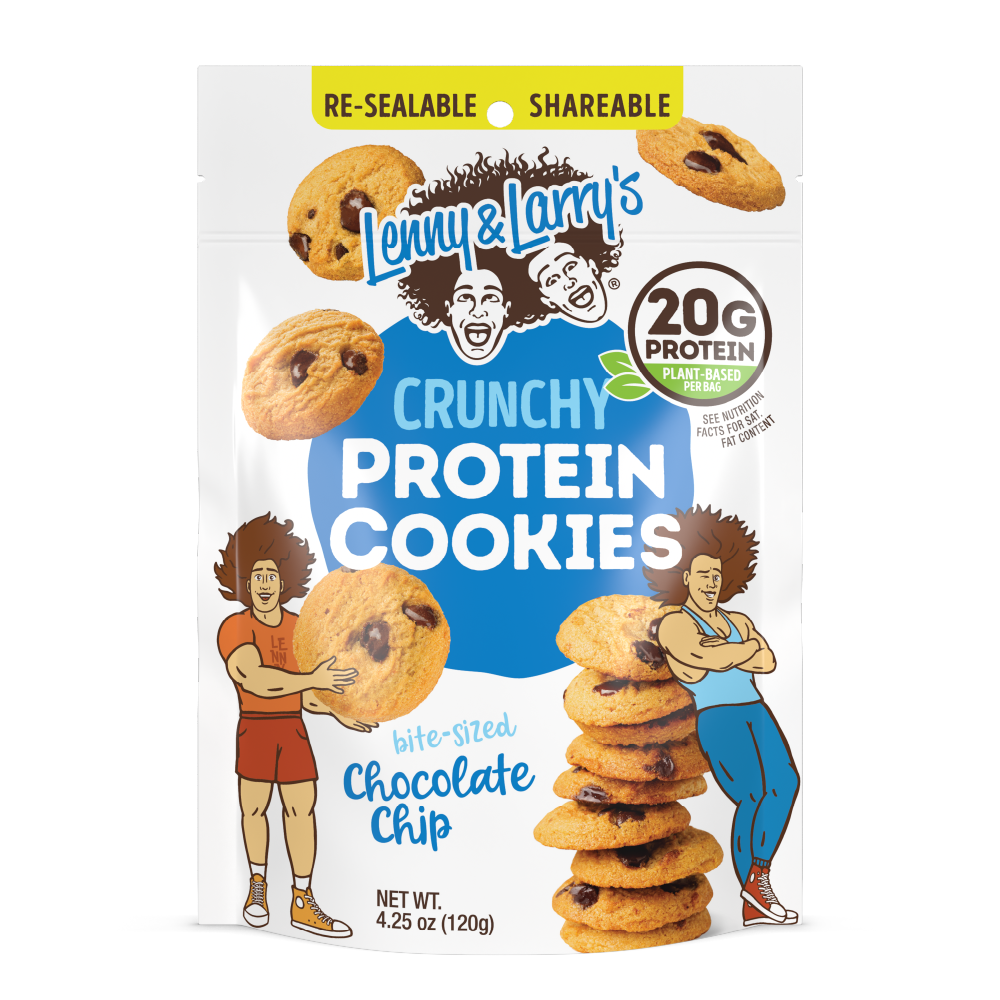
What actually matters in practice is having something on hand that you'll consistently eat, because the best post-workout nutrition plan is the one you don't skip. A snack that pairs protein with carbs - like Lenny & Larry's Protein Cookie - works for exactly that reason: it's not a supplement or a ritual, it's just a convenient way to hit the numbers that the research says matter.
Frequently Asked Questions
Is it bad to train fasted and skip eating right after?
Not necessarily. A 2025 randomized clinical trial published in the International Journal of Sport Nutrition and Exercise Metabolism compared resistance training performed fasted versus fed and found comparable strength and body composition outcomes between groups. What you eat over the full day matters more than whether you trained on an empty stomach.
How much protein do I actually need after a workout?
Somewhere between 20 and 40 grams in one sitting covers most training sessions, with the higher end suited to workouts that trained more total muscle mass. Beyond that range, extra protein in a single meal doesn't add to the muscle-building response. The Protein gets used in the body for other purposes instead.
Can I just eat a regular meal instead of a specific "recovery" snack?
Yes. Since the anabolic window is measured in hours rather than minutes, a normal meal eaten within a few hours of training covers the same need as a purpose-built recovery snack, as long as it includes enough protein.
Does eating a meal before a workout change what I need afterward?
It can. Because protein is absorbed and used over several hours rather than instantly, a substantial pre-workout meal is still contributing to muscle protein synthesis well into and after the session, which gives you more flexibility on timing afterward.
Is it worth buying specialized "recovery" products, or is regular food fine?
Regular food works fine. The research doesn't show a biological advantage for specialized recovery products over whole food or a standard protein snack with comparable protein and carbohydrate content. The main thing a purpose-built product buys you is convenience, not a better outcome.