


You don't need a personal trainer, a 14-tub supplement shelf, or three months of research to start lifting. You need answers to the handful of questions every beginner actually types into a search bar at 11pm the night before their first session. So here are eight of them, answered straight, backed by real research, with zero gymtimidation. Jump to whatever's keeping you up.
1. What should beginners know before strength training?
Start lighter than your ego wants, train each muscle about twice a week, eat enough protein, sleep like it's your job, and add a little more over time. That's the whole game in one sentence. Everything below unpacks it.
The mistakes that stall new lifters rarely involve picking the "wrong" exercise. They come from rushing (slashing calories too hard, piling on weight before your body adapts, or treating sleep as optional). Get the basics consistent and you'll out-progress the person chasing bad hacks every single time.
2. How long until a beginner sees strength training results?
You'll feel noticeably stronger within 2–4 weeks and start seeing visible muscle around 8–12 weeks. Those first wins arrive fast because your nervous system, not your muscle size, drives them early on.
When you start lifting, your brain gets better at recruiting motor units and firing them in sync, so you produce more force with the muscle you already have. Researchers call these neural adaptations, and they dominate the opening weeks of training before measurable muscle growth catches up. Translation: the early strength jump is real progress, even when the mirror hasn't updated yet. Stick around for week 8, that's when the size starts to really show up.
3. How many days a week should a beginner strength train?
Two to three full-body sessions a week is plenty. You don't need to live at the gym, and more days won't out-perform smart, consistent ones.
A systematic review and meta-analysis found that training frequency doesn't meaningfully change muscle growth once total weekly volume matches up, so hitting each muscle group roughly twice a week works great, and you get to pick the schedule you'll actually keep. For a beginner, two or three sessions also leaves room to recover, which matters more than racking up gym selfies.
4. How much protein do I (as a beginner) actually need per day?
Aim for roughly 1.6 grams of protein per kilogram of bodyweight per day (about 0.7 grams per pound). For a 150-pound person, that lands near 105 grams. Not 250.
The "one gram per pound" rule you've heard forever? Mostly bro-myth. The largest meta-analysis on the topic pegged the point of diminishing returns at about 1.6 g/kg/day, meaning extra grams past that did little for muscle gains. That's genuinely good news as your target is far more reachable than internet myths suggest.
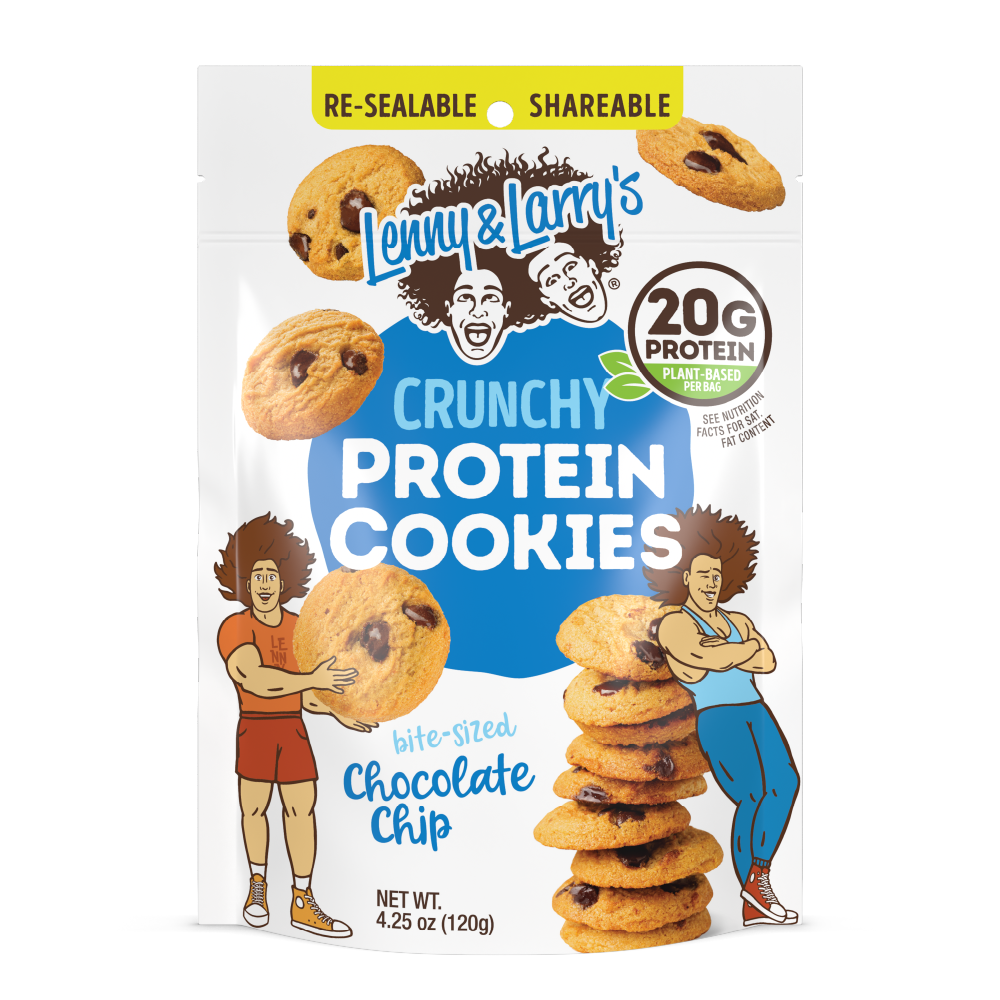
Here's where we'll be honest with you, because we sell the stuff: do you need protein snacks to hit that number? No. You can get there with chicken, eggs, yogurt, beans, and tofu. But hitting 105+ grams every single day, around work, errands, and a life, is where most beginners quietly fall short. A protein cookie or bar with 15–20 grams turns "I'll choke down a fifth chicken breast" into "handled." Snacks aren't a cheat code (and they aren't the villain some fitness content makes them out to be); they're a tool that makes a daily target stick. Use them where they earn their spot, not as your entire plate.
5. Should I (as a beginner) lose weight before strength training?
No. Start lifting now. Waiting until you're leaner means waiting through the exact window where strength training pays the biggest dividends.
New lifters and people carrying extra body fat sit in the sweet spot for body recomposition (building muscle and losing fat at the same time), especially with solid protein and a slight calorie deficit. So "get in shape first, then lift" gets it backwards. Lifting is how you get in shape, and it protects your muscle while the fat comes off. Walk in on day one.
6. What is progressive overload, and how do beginners use it?
Progressive overload means gradually asking your muscles to do a little more over time. More weight, more reps, more sets, or shorter rest. It's the single principle that separates "working out" from "getting stronger."
Most beginners assume it only means adding plates every session, then get discouraged when the jumps stall. It doesn't. Adding training volume (more total reps and sets across the week), reliably drives more growth, and that's often the gentler lever to pull. A practical starting method: pick a rep range like 6–10, choose a weight you can hit for 6 reps with a rep left in the tank, then add reps week over week. Once you clear the top of the range, nudge the weight up and start the climb again. You progress with your body instead of forcing leaps it hasn't earned.
7. How much sleep do you need to build muscle?
Aim for 7–9 hours a night. Skimp on it and you blunt both your performance and the recovery that turns training into results.
Short sleep drags down maximal strength on big compound lifts and disrupts the hormonal and recovery responses tied to training. It also quietly sabotages your eating. A tired version of you reaches for more food and worse choices, which makes hitting your protein and calorie targets harder. Think of sleep as the unglamorous half of your program. The reps build the stimulus; the sleep cashes it in.
8. Should beginners use body weight, free weights, or machines?
All three will build muscle. Dealers choice on this one. Pick what you'll do consistently and can control with good form. There's no morally superior option, despite what the barbell purists insist.
A 2023 analysis found no meaningful difference between free weights and machines for muscle growth; the main catch is that strength gains are somewhat specific to the tool you train with. So machines are a fantastic, low-intimidation on-ramp for beginners, body weight costs nothing and travels anywhere, and free weights build coordination and carry over to real life. Start with whatever gets you under tension this week, then branch out as your confidence grows.
Start here, not at the deep end
The pattern across all eight answers: progress comes from consistency, not intensity theater. Lift two or three times a week, hit roughly 1.6 g/kg of protein, sleep 7–9 hours, add a little each week, and use the tools you'll actually stick with. Your nervous system rewards you in weeks; your mirror catches up by week eight or twelve.
And on the days when your protein math refuses to cooperate, that's exactly what a good protein snack is for. It's not a shortcut, just a smarter way to land the target you already set.