


At noon, you're patient and reasonable. At 3 p.m., a slow reply to one email feels like a personal attack.
Most people blame low blood sugar and leave it there. The research tells a more useful story.
Hunger doesn't make you angry on its own. It makes you feel bad, and your brain decides what that feeling means. Once you understand that handoff, you can interrupt it.
What Does Hangry Actually Mean?
Hangry means feeling irritable or angry because you're hungry, and research in everyday life confirms the link is real.

The word blends "hungry" and "angry." Psychologists Jennifer MacCormack and Kristen Lindquist of the University of North Carolina open their paper in Emotion with the dictionary definition: "bad tempered or irritable as a result of hunger."
A 2022 field study in PLOS ONE tested the idea outside the lab. For 21 days, 64 adults in central Europe answered smartphone prompts five times a day, rating their hunger and mood, for 9,142 responses in total. When participants felt hungrier, they reported more anger, more irritability, and less pleasure. Hunger had no link to how alert or worked up they felt.
The study relied on self-reported hunger, so it shows that hunger and anger travel together without explaining why. The explanation comes from what happens between your body and your brain.
Why Does Hunger Make You Angry?
Hunger sets off a chain reaction we call the Hanger Cascade: your body produces a bad feeling, and your brain blames whatever happens to be in front of you.
- Your fuel runs low. Hours after your last meal, hunger signals build between your gut and your brain.
- You feel bad without a clear label. MacCormack and Lindquist describe hunger as a general unpleasant state in your body. Your brain doesn't always file that feeling under "hunger."
- Your surroundings supply a target. A traffic jam, a slow coworker, or a crashed laptop gives the bad feeling somewhere to land.
- Your brain calls it anger. Without stopping to notice that you're hungry, you read the feeling as frustration with the people and problems around you.
The first two steps are ordinary physiology. The anger happens in steps three and four, which is also where you have the most control.
Is Low Blood Sugar the Real Cause of Being Hangry?
Low blood sugar plays a part, but it doesn't explain hanger on its own.
The best-known evidence for the blood sugar explanation comes from a 2014 study in PNAS. For 21 days, 107 married couples checked their blood sugar every evening. Each night, alone, every participant stuck between 0 and 51 pins into a voodoo doll representing their spouse, depending on how angry they felt. The lower their evening blood sugar, the more pins they used. In a follow-up lab game, lower average blood sugar also predicted louder, longer noise blasts aimed at their spouse, who never actually heard them.
Your body does mount a stress response when blood sugar falls, releasing glucagon, adrenaline, and cortisol to push it back up. A 2022 systematic review in Diabetologia pooled data from 733 people without diabetes. In those people, the median trigger points were 3.8 mmol/L (about 68 mg/dL) for glucagon, 3.4 mmol/L (about 61 mg/dL) for adrenaline, and 2.8 mmol/L (about 50 mg/dL) for cortisol. The authors concluded that these responses require "much lower glucose levels" than commonly assumed. Most of the data came from young men in lab studies where blood sugar was lowered with insulin, so everyday conditions may differ.
That high bar makes blood sugar an unlikely explanation for every flash of mid-afternoon irritation. Researchers have also questioned the theory behind the couples study. A published response argued that its data didn't support the idea that glucose powers self-control, and MacCormack and Lindquist note that this idea has faced failed replications and mixed findings.
The better reading: blood sugar can amplify the Hanger Cascade, but how your brain interprets the feeling decides whether you end up angry.
Why Do Some People Get Hangry and Others Don't?
Your surroundings and your awareness of your own feelings decide whether hunger turns into anger.

In the first two of MacCormack and Lindquist's experiments, 218 and 140 adults online were shown a negative, neutral, or positive image, then asked to rate an unfamiliar Chinese symbol as pleasant or unpleasant. Hungrier people rated the symbol more negatively, but only after seeing the negative image. In a neutral or positive setting, hunger made no difference.
Their lab study went further. More than 200 university students either fasted or ate beforehand, and some first completed a short writing exercise about their emotions. Every student then worked through a tedious computer task that was rigged to crash, and a researcher blamed them for it. Hungry students who hadn't reflected on their emotions reported more stress and hatefulness and rated the researcher as harsher. Hungry students who had reflected on their emotions showed none of those shifts.
This was one lab study in college students, so treat it as a strong lead rather than settled science. Still, the pattern across all three experiments is consistent: hunger makes you prone to negativity, and a frustrating situation gives that negativity a target.
How Do You Stop Being Hangry?
Eat before the cascade gets going, and name the feeling when it shows up anyway.
- Call it what it is. Telling yourself "I'm hungry, not angry" puts the awareness from the UNC lab study to work. It won't feed you, but it can stop you from taking your hunger out on someone else.
- Close long gaps on demanding days. Hard training sessions, long shifts, and back-to-back meetings burn through fuel and add frustration, which gives hunger more targets.
- Choose snacks with protein. In a University of Missouri trial, an afternoon yogurt snack with more protein reduced hunger and delayed the next eating occasion compared with lower-protein versions.
- Delay hard conversations. The married couples study suggests the people closest to you take the hit when you're running on empty. Eat first, then talk.
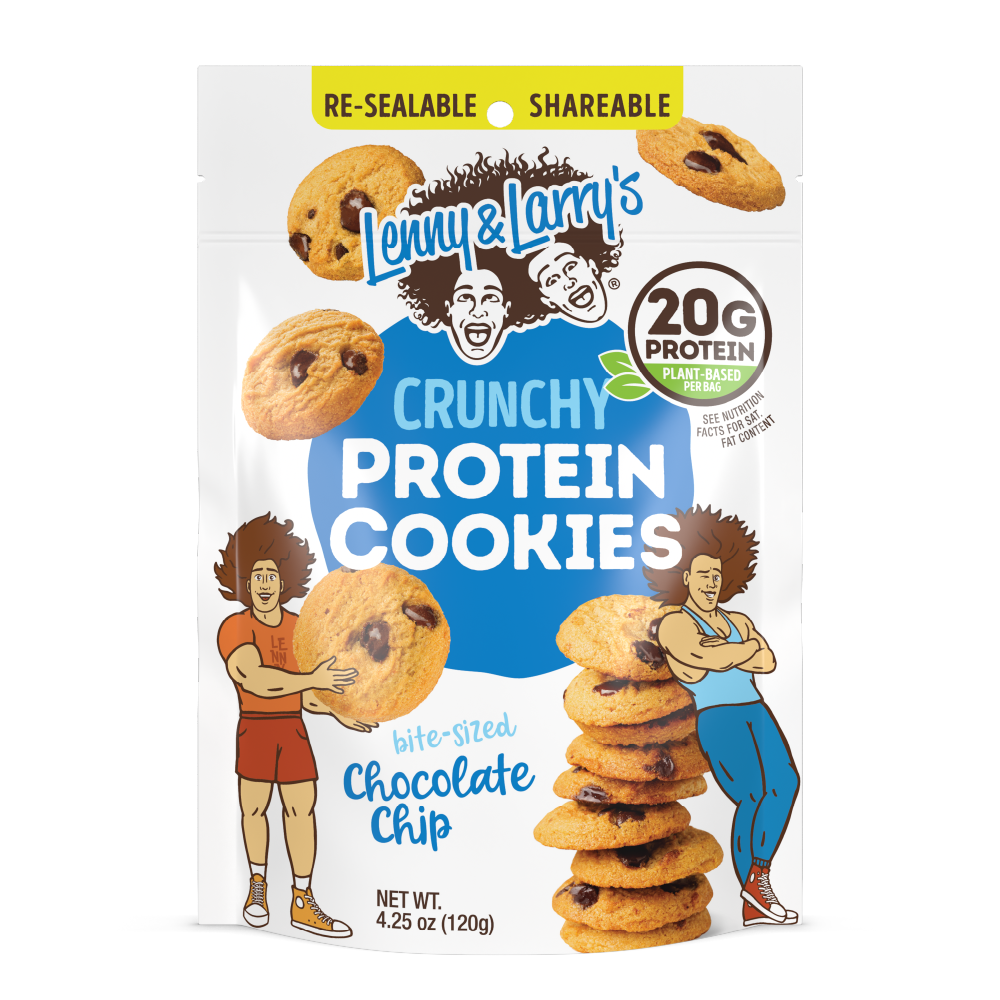
- Keep a backup where hunger finds you. Stash a snack in your gym bag, desk drawer, or car. A Lenny & Larry's Protein Cookie travels well and pairs plant protein with carbohydrate, so you have an answer ready when the cascade starts.
Answering Additional Questions Surrounding Hunger + Anger.
Is Being Hangry a Real Thing?
Yes. In a 2022 study published in PLOS ONE, 64 adults tracked their hunger and mood five times a day for 21 days. Higher hunger was linked to more anger, more irritability, and less pleasure in everyday life.
Why Do You Feel Angry Instead of Just Hungry?
Hunger creates a general unpleasant feeling that your brain doesn't always recognize as hunger. Research from the University of North Carolina found that when that feeling shows up in a frustrating situation, people tend to read it as anger toward whatever is around them.
Is Being Hangry Caused by Low Blood Sugar?
Partly. A study of 107 married couples linked lower evening blood sugar to more anger toward a spouse. A 2022 review found that the body's stress response to low blood sugar starts at lower glucose levels than most people assume, and other research shows that context and awareness shape whether hunger becomes anger.
Can You Stop Being Hangry Without Eating?
Naming the feeling helps. In a lab study, hungry students who reflected on their emotions beforehand didn't show the rise in stress and hostility seen in hungry students who skipped that step. Eating still fixes the underlying cause, so treat awareness as a bridge to your next snack.
What Should You Eat to Avoid Getting Hangry?
Choose snacks that include protein and eat them before long gaps between meals. In one trial, a higher-protein afternoon yogurt snack reduced hunger and delayed the next eating occasion compared with lower-protein versions. Keeping a snack in your bag or desk makes it easier to eat before hunger takes over.