


You probably picture two things when you hear "pea protein." Either a bag of actual peas, or a tub of powder you scoop into a shaker bottle. Neither one is where most people encounter pea protein anymore. It has quietly become one of the most common functional ingredients in packaged food, showing up in products that have nothing to do with a post-workout shake.
Before you begin - always consult your physician before beginning any exercise (or dietary) program(s). This general information is not intended to diagnose any medical condition or to replace your healthcare professional. Consult with your healthcare professional to design an appropriate exercise prescription (or dietary program) that's right for you.
Pea Protein Lives In Your Pantry, Not Just Your Gym Bag
Pea protein now appears in far more everyday foods than it does in supplement tubs. Food manufacturers use it in cookies, bars, milk alternatives, pasta, meat substitutes, yogurt, and baked goods, largely because it does useful work in a recipe beyond adding a number to a nutrition label. Understanding where it actually shows up gives you a much more accurate picture of how you're likely already eating it, whether you buy protein products on purpose or not.
Food Brands Reach For Pea Protein Because Of What It Does, Not Just What It Contains
Pea protein isolate earns its spot in a recipe because of its functional properties, not only its protein content. Research on pea protein isolate has documented its emulsifying and foam-stabilizing behavior, along with its ability to form gels and bind water and fat, since pea protein isolate demonstrates emulsification behavior along with foam formation and stability comparable to other plant-based structuring proteins. That combination of properties is exactly what a food scientist needs when trying to hold a cookie dough together, stabilize a dairy-free yogurt, or create the chew of a meat-free patty.
There's a nutritional reason pea protein rarely appears alone on an ingredient panel, too. Pea protein is high in lysine, an amino acid many grains fall short on, but it runs low on methionine and cysteine, with research comparing pea and rice protein isolates finding that rice protein carried the highest methionine content while pea protein isolate carried the lowest, alongside the highest lysine content of the proteins tested. Rice protein happens to run the opposite way, low in lysine and comparatively rich in methionine, which is why so many products pair the two, with manufacturers blending rice protein and pea protein together specifically because it creates a more complete amino acid profile similar to high-quality animal proteins. That pairing shows up constantly once you start reading labels on cookies, bars, and shakes.
The Foods Where Pea Protein Actually Shows Up
Pea protein has moved into nearly every category of packaged food, from soft-baked cookies to dairy-free ice cream. Here's a category-by-category look at where it's doing real work.
Protein Cookies And Soft-Baked Snacks

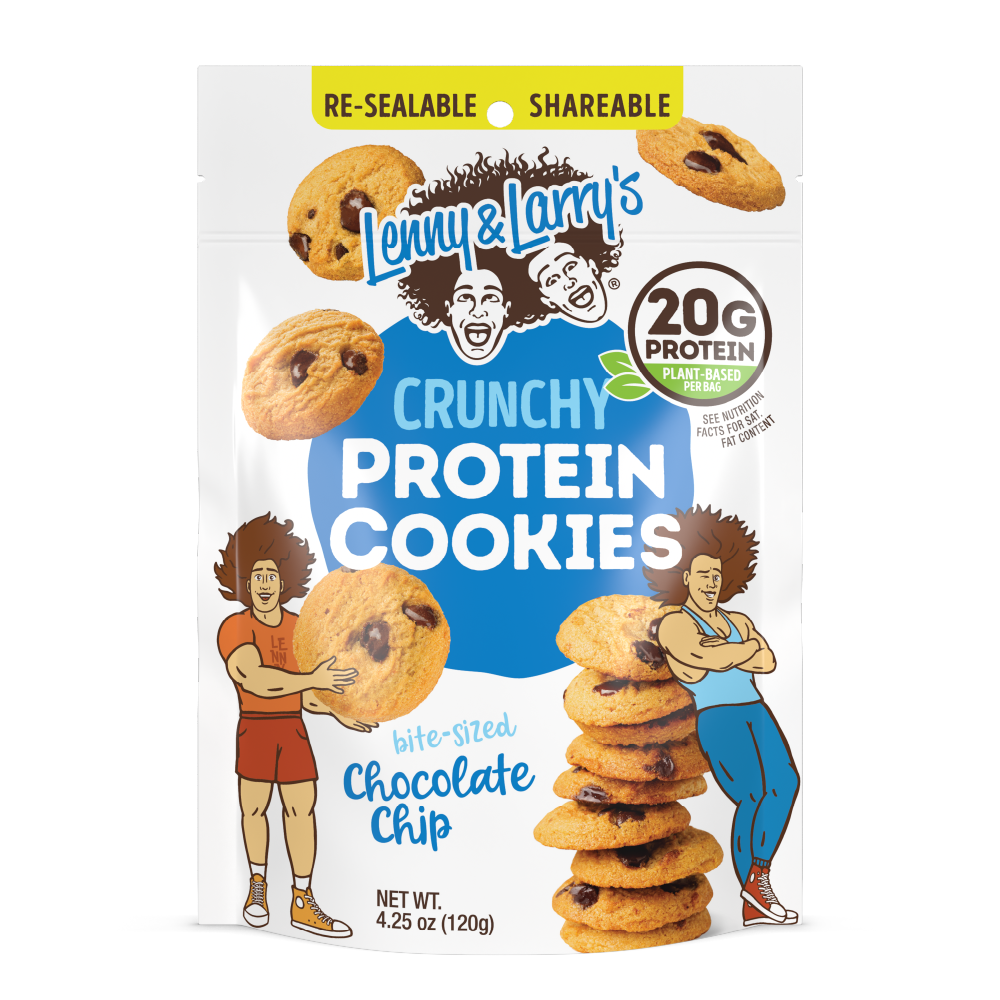
Soft-baked protein cookies are one of the most direct food applications of pea protein, where it's paired with a second protein for a complete amino acid profile. Lenny & Larry's The Complete Cookie is a straightforward example: its protein blend combines pea protein isolate with brown rice protein and wheat gluten, the same lysine-methionine complementary pairing described above, formulated into a cookie rather than a shake. The pea and rice combination is doing double duty here, supplying essential amino acids while also helping bind the dough and hold moisture in a soft-baked format.
Protein And Snack Bars
Snack and protein bars use pea protein as a base ingredient, frequently blended with brown rice, hemp, or chia protein to round out the amino acid profile. This blending approach is common enough that it's become close to an industry default for vegan bars, with brands manufacturing vegan protein shakes and powders that list pea protein as the first ingredient while also including protein from brown rice, chia, and hemp seeds. In bar form specifically, pea protein's water-binding and gelling properties help create the chewy, cohesive texture bars need to hold together without crumbling.
Pea Protein Milk

Pea protein milk is a dairy-free beverage category built entirely around the protein, not just flavored with it. Unlike almond or oat milk, which need added protein to compete nutritionally with dairy, pea milk starts with meaningfully more protein per serving, delivering roughly 8 grams of protein per cup along with calcium fortification that runs higher than what's found in cow's milk. It also behaves differently in the kitchen than most plant milks, holding up in heated sauces and soups without curdling the way some nut-based milks can, which makes it usable in pasta sauces, soups, baked goods, and coffee drinks in roughly a one-to-one swap for dairy milk.
Plant-Based Meat Alternatives
Pea protein isolate is the primary protein source behind many plant-based burgers, patties, and meat strips. Meat alternative brands moved toward pea protein specifically to get away from soy, since a large share of plant-based meat customers wanted to avoid additional soy in their diet, according to comments from Beyond Meat's CEO explaining the company's early ingredient decisions. In a meat analogue, pea protein isolate is typically combined with other plant proteins and formulated to build the fibrous, chewy structure that mimics ground meat or a burger patty, using formulation approaches built specifically around pea protein isolate's structural properties in plant-based burger applications.
Dairy-Free Yogurt

Pea protein is frequently the ingredient that closes the protein gap in plant-based yogurt. Oat, almond, and coconut yogurts are naturally low in protein compared to dairy yogurt, and most plant-based yogurts that reach dairy-comparable protein levels get there with added pea protein, since many oat and nut milk yogurts only reach five grams of protein per serving specifically when they include added, usually pea, protein. Some coconut-based yogurts use the same fix, since coconut itself contributes almost no protein on its own, with several coconut blend yogurts reaching 8 to 10 grams of protein per serving specifically because of added pea protein.
High-Protein Pasta And Noodles
Pea protein appears in pasta both as a flour-blended ingredient and as the base for pea-forward sauces. On the formulation side, pea flour and pea protein are used to boost the protein content of pasta and noodle products well above what wheat flour delivers on its own. Home cooks lean on the same underlying property outside of packaged pasta, too, blending whole peas into pasta sauces for both creaminess and a protein boost, using peas to build a creamier sauce texture while adding meaningful protein and fiber to the dish.
Protein-Fortified Bread And Baked Goods

Pea protein isolate is used to fortify bread and other baked goods well past what wheat flour alone provides. Substituting a portion of wheat flour with pea protein isolate has been shown to push a standard loaf's protein content above 20 percent, more than double what conventional bread delivers, in formulation work where wheat flour was substituted at a 10 percent level with pea protein isolate to produce bread with protein content exceeding 20 percent. This is a lower-profile use case than cookies or bars, but it's one of the more direct examples of pea protein doing a purely functional job in a familiar food.
Dairy-Free Ice Cream
Pea protein shows up in non-dairy ice cream and frozen yogurt as both a protein source and a texture stabilizer. In formulation research, pea protein isolate has been used as the structural base for vegan frozen yogurt-style ice cream, with ingredients like inulin added to improve texture, melting behavior, and overrun, in studies developing vegan yogurt-ice cream built on pea protein isolate specifically to investigate how added ingredients affected hardness, melting, and texture. On store shelves, the same idea shows up in dairy-free ice cream lines built on pea protein rather than nut or oat bases, in product lines built specifically around pea protein as their non-dairy ice cream base.
How To Spot Pea Protein On A Label
Pea protein is easiest to identify on an ingredient panel when you know it rarely travels alone. Look for it listed as "pea protein," "pea protein isolate," or as part of a "protein blend" alongside brown rice protein, wheat gluten, or another grain protein. That pairing isn't accidental. It's the methionine-lysine complementary relationship described earlier, and its presence on a label is a reasonably reliable sign that a food was formulated with amino acid completeness in mind, not just a protein number for the front of the package.
Frequently Asked Questions
Is pea protein a complete protein on its own? Not quite. Pea protein contains all nine essential amino acids but is limiting in methionine, which is why it's so often paired with rice protein or wheat gluten in packaged foods.
Why do so many pea protein foods also list rice protein? Rice protein is low in lysine but higher in methionine, the exact opposite profile of pea protein, so blending the two produces a more complete amino acid profile than either one alone.
Does pea protein taste different from whey or soy protein? Pea protein has a mild, slightly earthy flavor on its own, which is part of why it's frequently blended with other proteins and flavorings rather than used as a single ingredient in flavored products.